Sharpening Works on the Picture.Wavefront Restore Works on the Optics.
Blind deconvolution for PixInsight. It reads from your stars what your telescope, mount and sky did to the image, then reverses it across the whole frame.
Every Star Records What Went Wrong
A star is a point of light. By the time it reaches your sensor, your telescope, your corrector, your mount and the atmosphere have smeared it into something else. That smearing isn't random. It is the signature of specific defects, and each one leaves its own fingerprint on every star in the frame.
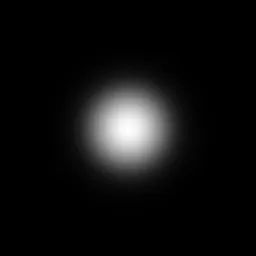
Atmospheric Blur
From turbulence in the air above your telescope. Usually the biggest blur of all.
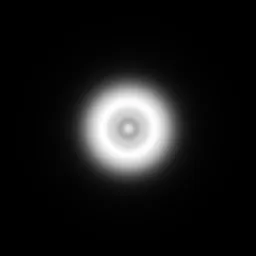
Defocus
From a focus that's off, or a field that curves away from the sensor.
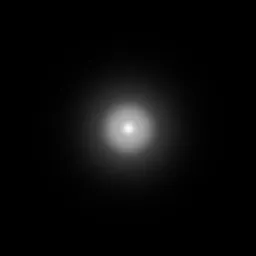
Spherical Aberration
From a mirror or lens that is under- or over-corrected.
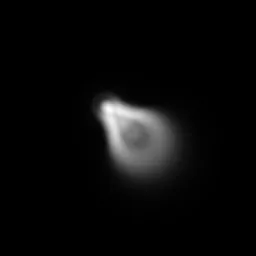
Coma
From a fast mirror, or optics out of collimation.
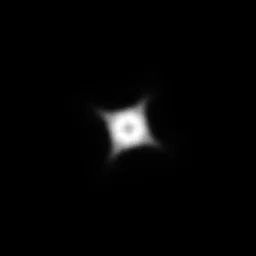
Astigmatism
From a tilted or stressed element.
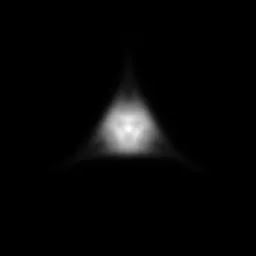
Trefoil
From a mirror pinched by its supports.
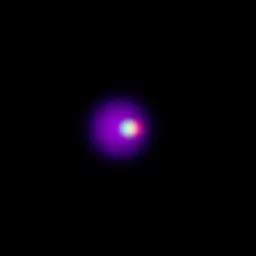
Chromatic Aberration
From a lens that doesn't bring every color to one focus.
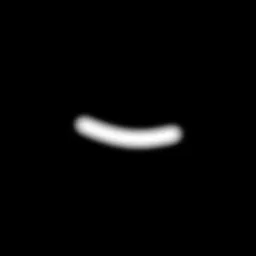
Elongation
From guiding errors, wind, or a mount that isn't tracking cleanly.
Corrected
A point of light again.
Optical designers describe these as errors in the wavefront that reaches your sensor. That is where the name comes from.
Read from the Stars, Reversed Everywhere
Your stars show Wavefront Restore what happened to your image. It reverses that across the whole frame, not one correction for the stars and another for everything else.
A star is a point of light, so the shape it arrives in is the blur itself, with nothing else mixed in. That makes every star a measurement. Together they show Wavefront Restore which aberrations are present, how strong they are, and how they change from the center of the frame to the corners.
The same optics blurred everything else in exactly the same way: a galaxy's dust lanes, a nebula's filaments, the edge of a globular cluster's core. So Wavefront Restore applies what it reads from the stars to the whole image. The correction changes across the field, because the optics do. It never changes between a star and the nebula behind it, because at any point in the frame the two were blurred identically, and the physically correct way to undo that is the same for both.
This holds exactly on linear data, before any stretch, which is what WFR is built and tested for. There are a few deliberate exceptions, such as the halo around a very bright star, which is left as it is. How It Works in the docs lists them.
It Reverses the Defect, Not the Symptom
Wavefront Restore is trained on what each of these defects actually does to a star image, and it undoes that defect. It doesn't learn that stars should look round and push them that way.
The difference shows in a crowded field. Stars that were blended together come apart, instead of a large blur shrinking into a smaller one.
Blind
No PSF to supply, no reference star to pick, no settings to guess. It reads the aberrations from the stars in your frame.
Corners as Well as the Center
It corrects the whole field, including the corners, where most optics are honest about their flaws.
Two Modes
Pick one in the process window. Both are fully blind.
Correct Aberrations
Removes defocus and field curvature, spherical aberration, coma, astigmatism and trefoil, chromatic aberration, and the elongation from guiding, wind and the mount. Seeing blur is left alone. Nothing to set.
Deblur and Recover Detail
Corrects the same defects, then removes blur from atmospheric seeing, usually the biggest blur in the image. Amount, from 0 to 1, sets how far it goes.
Where It Runs
Inside PixInsight 1.9.5 or later, as a process like any other, on Windows 10 or later and on Apple silicon Macs with macOS Sonoma or later; Linux is coming soon. On Windows it runs on an NVIDIA graphics card, and without one it falls back to the CPU, which is much slower. Your images are processed on your own computer and never uploaded.
Updates arrive through PixInsight's own update system. The current version is named Abbe; each major version gets a name rather than a number.
The Beta
The beta is free and by invitation. We are adding testers in small groups: join the waitlist, and we will email you when there is a place. Beta builds stop working 45 days after they are built, so keep PixInsight's updates switched on and you will always have a current one.